Snow tubing looks like the easiest winter outing there is: sit down, slide, laugh, walk back up, repeat. Then three hours pass, the wind picks up, someone's gloves are soaked through, and the day ends with a crying kid and a soggy drive home. Almost all of that is avoidable with an hour of prep the night before.
Here's what to wear, what to carry up the hill, and what to leave waiting in the car so the fun lasts from the first run to the last.
Start With Layers, Not Bulk
Cotton is the wrong choice for a tubing hill. It soaks up sweat and holds it against your skin, which is exactly how you end up shivering in a parking lot. Start with a thin synthetic or merino wool base layer, top and bottom, that fits close to the body. Add a fleece or light puffy mid layer for warmth. Finish with a waterproof shell jacket.
For your legs, wear waterproof snow pants, not water-resistant ones. You'll be sitting in snow every single run, and it melts. Bib-style snow pants are the better pick for kids and adults who tumble — they keep snow from sliding down the back of your jacket when you flop off the tube at the bottom.
Small details that keep snow out
- Pull mitten or glove cuffs over your jacket sleeves, not tucked under.
- Snow pant cuffs go over your boots, so snow slides off instead of in.
- A neck gaiter beats a long scarf, which can snag.
- Skip dangling drawstrings, clips, and anything loose that could catch on a tube handle.
Hands and Feet Make or Break the Day
Cold fingers ruin a tubing trip faster than anything else. Bring waterproof mittens if you can — mittens keep fingers together and warmer than gloves. If you need to use a phone or open snack wrappers, wear a thin liner glove underneath.
Two pairs per person is the real rule. One pair on your hands, one pair drying in the bag. Wet gloves stay wet all day.
Hand warmers help, but use them well. Air-activated packs need oxygen, so open them fifteen or twenty minutes before you head outside. Tuck them in the outer pocket of a mitten rather than pressed against bare skin, and check on young kids often. If you or a family member has poor circulation, diabetes, or reduced feeling in the hands, ask a doctor before using chemical heat packs.
Boots and socks
The classic mistake is rubber rain boots. They're waterproof but completely uninsulated, and feet go numb in under an hour. Wear waterproof, insulated winter boots with real tread — you'll be walking on packed snow and ice.
One pair of wool or synthetic socks, snug but not tight. Three pairs of cotton socks squeeze your feet, cut off circulation, and guarantee cold toes. Pack a spare pair in the bag.
What to Pack in the Hill Bag
One backpack is plenty for a family of four if it holds the shared items. Keep it light; you may be carrying it between lanes or hauling it up a hill if there's no conveyor lift.
- Spare gloves or mittens for everyone
- A dry hat and neck gaiter
- Hand warmers, still sealed
- A small towel for faces and noses
- Sunscreen and lip balm with SPF — snow reflects sunlight strongly
- Sunglasses or goggles
- A water bottle or thermos of hot chocolate
- Snacks that survive freezing: trail mix, jerky, crackers, dried fruit
- A wet bag or trash bag for soaked gear
- Phone in an inner pocket, where the battery lasts longer
Food, Drink, and Warm-Up Breaks
Cold air hides how much you're sweating. Kids in particular run hard, get thirsty, and don't notice until they're miserable. Stop every forty-five minutes or so, go inside if there's a lodge, and drink something.
Chocolate bars turn into bricks in a coat pocket, so save them for the car. Granola bars get hard too. Trail mix, jerky, crackers, and dried fruit hold up better. A thermos of hot chocolate or soup does more for morale than any piece of gear.
When you go inside, take off your hat and open your jacket. Sweating indoors and then going back out is what makes people cold for the rest of the afternoon.
The Dry Clothes Rule and the Car Kit
This is the single best thing you can do for a family tubing day: pack a complete change of clothes for every person and leave it in the car. Not a spare shirt. Everything — socks, base layer, pants, hat, gloves.
At the end of the trip, wet gear goes in a trash bag, dry clothes go on, and the ride home is quiet and comfortable instead of a chorus of complaints. Add a towel per person, a blanket, and a plastic bin or boot tray for the wet boots so the car doesn't soak through.
If you only have room for one thing besides the clothes, make it the dry socks.
Before You Leave the House
- Check the hill's hours, tube policy, and any height or age limits for kids. Some hills provide tubes and don't allow outside ones.
- Look at the wind forecast, not just the temperature. Wind changes how cold the day actually feels.
- Have everyone eat a real meal. Hungry kids get cold fast.
- Lay out layers the night before so nobody is hunting for a missing mitten at 7 a.m.
- Fill water bottles and the thermos.
- Charge phones and have tickets or reservations ready offline.
- Aim to arrive early. Midweek mornings are quieter, and late-afternoon snow gets icy and rutted.
Keep the Day Short, Warm, and Fun
Two or three hours on the hill is plenty for young kids. A short trip that ends with everyone still laughing beats a five-hour marathon that ends in tears and frozen fingers.
Watch for hands and feet that look white, gray, or waxy, or that feel numb or tingly. That's your signal to head inside and warm up slowly — no rubbing snow on skin. If feeling doesn't come back, get medical help.
Go early, break often, keep dry clothes waiting in the car, and leave while the day is still good. That's a tubing trip your family will want to repeat.
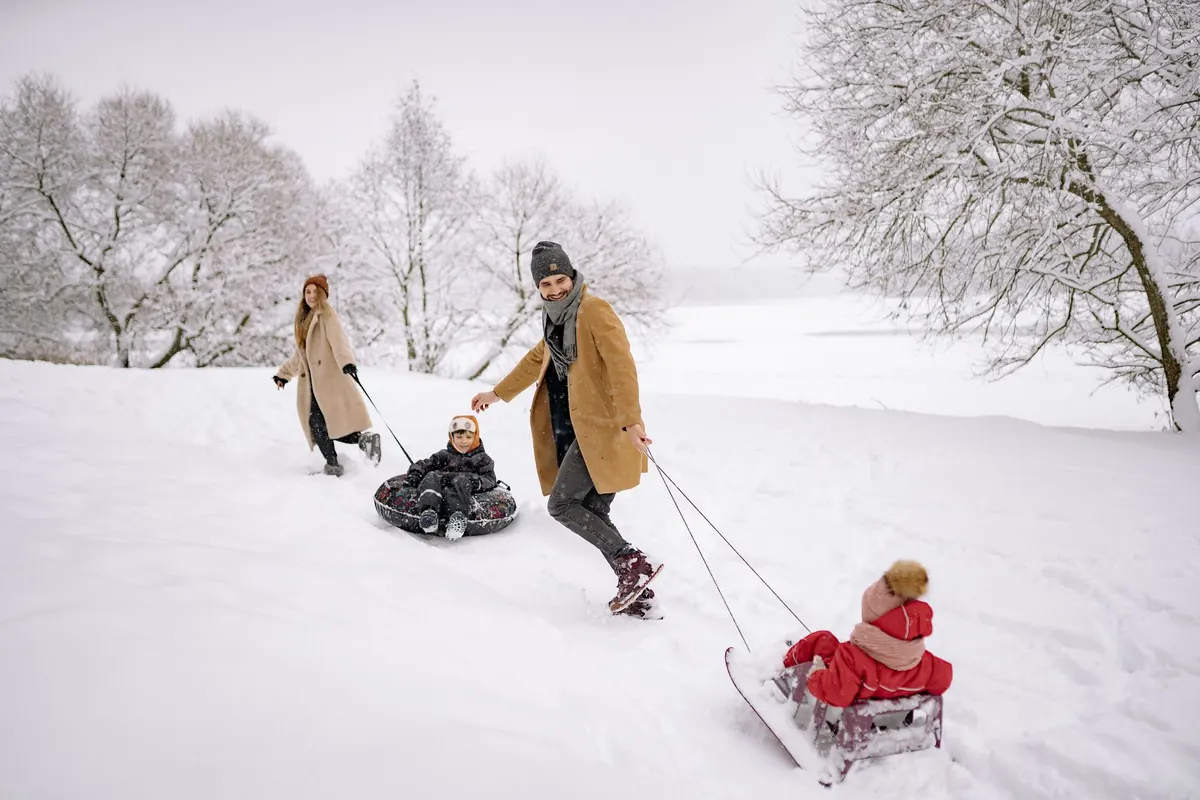
Photo: Yan Krukau / Pexels