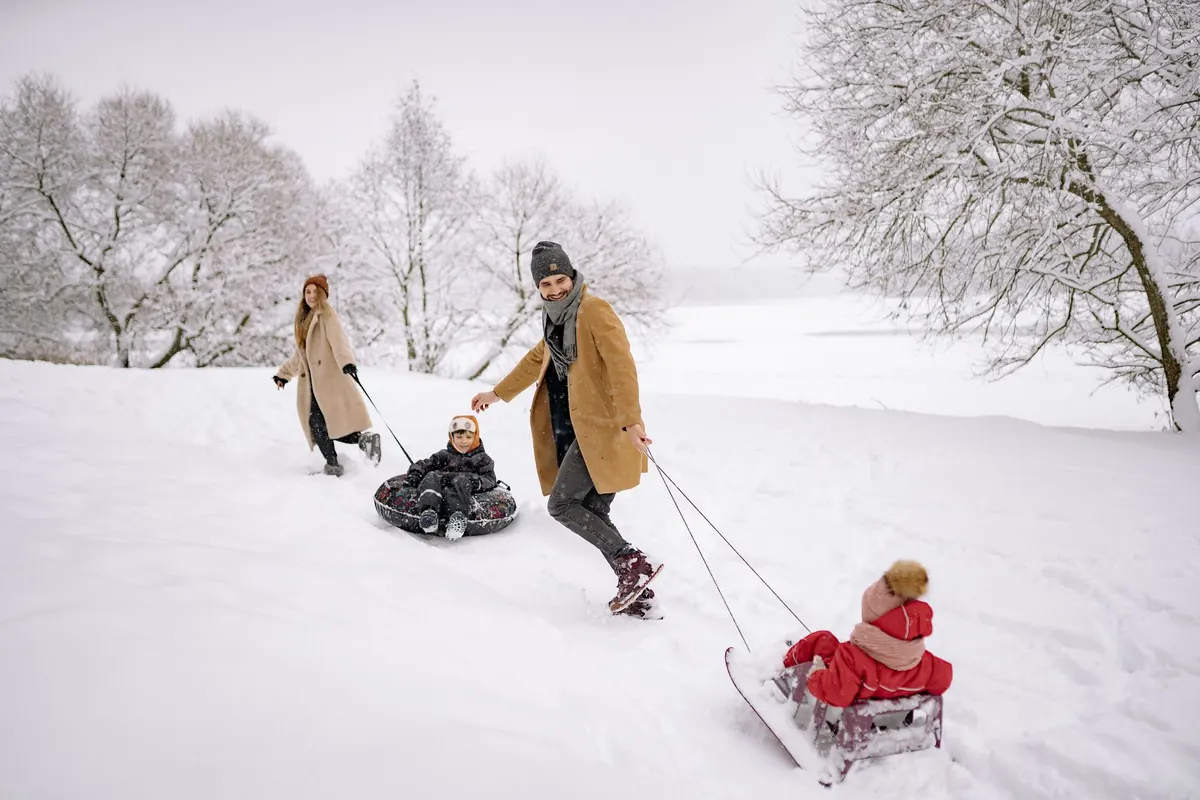
You are standing at the top of a groomed hill with two options in the trunk: a stiff plastic snow tube with a slick black bottom, and a soft inflatable sled that looks like a pool toy with delusions of grandeur. Both fit a human. Both slide on snow. That is roughly where the similarities end.
The choice matters more than most people expect. Pick wrong and you will spend the afternoon hiking back up a hill that keeps spitting you sideways, or you will drive home with a backseat full of gear and no room for the cooler. Here is how these two actually behave when the snow is packed, the line is long, and everyone wants the fastest run.
How Each One Is Built
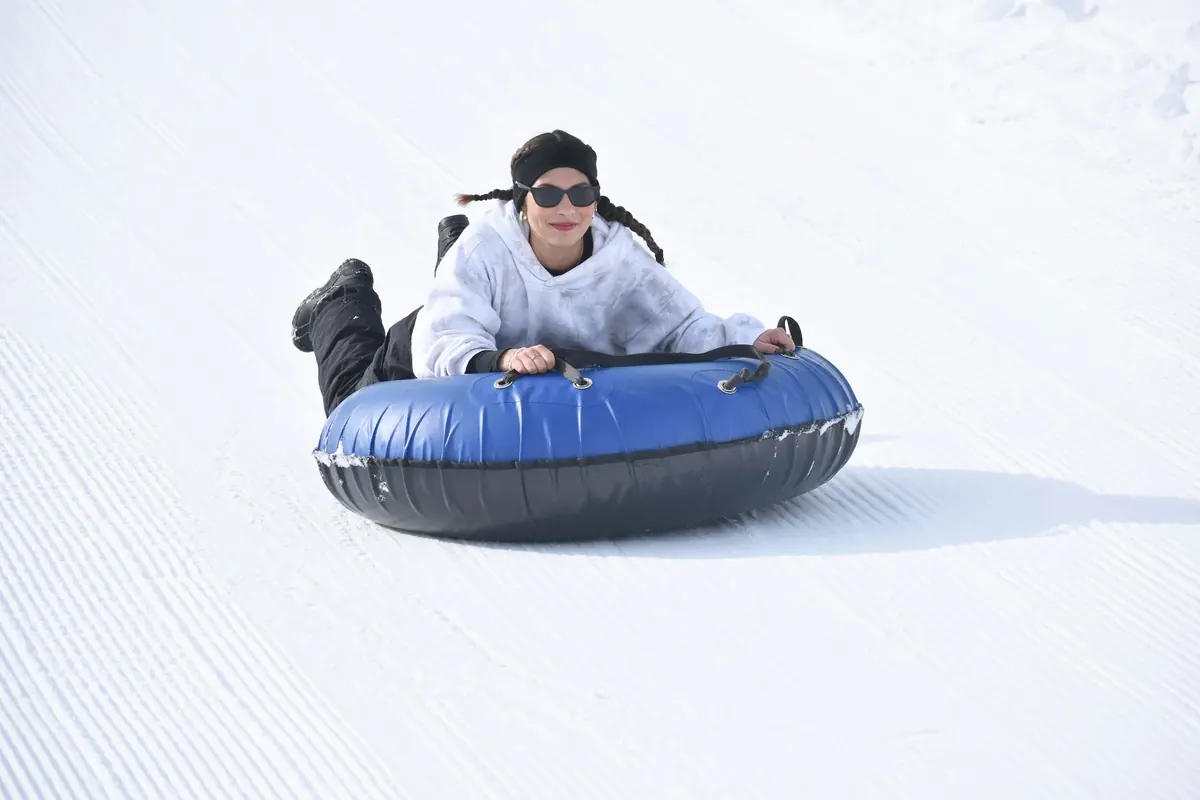
A snow tube — the hard-bottom kind sold for lift-served tubing hills — is a molded plastic shell with a slick base and a molded seat on top. Some have a rigid handle or a leash strap. The body is usually one piece of high-density polyethylene, which is why rental outfits favor them: nothing to inflate, nothing to puncture, nothing to patch at 8 a.m. on a Saturday.
An inflatable sled is a vinyl or heavy-duty PVC bladder inside a fabric or vinyl shell. You blow it up (or pump it, if you value your lungs), and the entire underside is soft and slightly cushioned. Many models have two handles, a backrest, and sometimes a tow rope. Deflated, it folds into something the size of a folded beach towel.
That construction difference drives everything else.
Speed: Hard Bottoms Usually Win
On packed snow, a hard, smooth plastic base glides with very little friction. An inflatable sled's bottom flexes and deforms under your weight, which scrubs speed. The bladder also presses flatter against the snow, so more surface area drags. In practice, on the same hill and the same snow, a hard-bottom tube generally pulls ahead of an inflatable sled of similar size.
But snow condition flips the result more often than gear choice does.
- Fresh powder: the inflatable sled can be easier to get moving because you sink in and plow, while a rigid tube may need a hard-packed lane to slide well.
- Packed or icy surface: the hard-bottom tube is the clear winner and can get genuinely fast on a steep lane.
- Warm, wet snow: everything slows down. A hard base tends to keep more of its glide than a soft one.
- Rider weight: heavier riders go faster on both, and the gap between the two narrows.
If your goal is a straight, fast ride down a maintained lane, go hard-bottom. If you want to flop around in the yard after a snowfall, the inflatable is fine and forgiving.
Steering and Control
Neither of these is a snowboard, so set your expectations. A hard-bottom tube tracks reasonably straight once it is moving, and you can influence direction by leaning and by dragging a hand or heel. The slick base keeps you pointed where gravity wants you, which is usually downhill and occasionally into a fence.
Inflatable sleds are looser. The soft, wide base grabs uneven snow, and small bumps send you spinning. That is fun on a gentle slope and nerve-wracking on a steep one. Two handles do give you something to hold and a bit of leverage to shift your weight, which helps. Tubes with only a single molded grip give you less to work with.
Spinning is the real test
Ride both on the same hill and count how often you end up backwards. Hard-bottom tubes tend to rotate less on packed lanes. Inflatable sleds spin more, especially when a rider leans back too far. If you are buying for younger kids on a small, gentle hill, a little spin is part of the fun. On a long, fast run, it is not.
Safety: What Actually Matters
Neither design is inherently safe or unsafe. Behavior and terrain decide that.
The real risks are the same for both: hitting a tree, a rock, a fence post, a parked car, or another person; riding headfirst; riding on a hill with a road, creek, or parking lot at the bottom; using a tow rope behind a vehicle; and riding on ice.
A few practical rules that apply to both:
- Scout the run from the bottom first. Look for stumps, bare patches, fences, and where the run ends.
- Ride feet-first, seated or kneeling, and keep limbs inside the tube or sled.
- One person per tube or sled. Doubling up raises the center of gravity and makes a rollover much more likely.
- Leave a gap between riders. Give the person ahead enough time to clear the run before you start.
- Wear a helmet on any hill with speed, obstacles, or other people.
- Skip the hill entirely if it ends near water, traffic, or a drop-off.
One structural point in the tube's favor: a hard shell holds its shape at speed and does not pop. An inflatable can lose pressure from a sharp branch or a rock and go soft mid-run, which changes how it handles with no warning. Carry a patch kit if you go the inflatable route.
If anyone in your group has a back, neck, or joint concern, or you are choosing gear for a child, talk to a doctor about what is appropriate rather than relying on a product label.
Durability and Maintenance
Hard-bottom tubes shrug off abuse. Drag them across gravel, stack them in a garage, leave them in the cold. They may scuff and the base may lose a little slickness over seasons, but there is nothing to repair. Some people rub a little wax or silicone spray on the bottom to restore glide.
Inflatables demand more attention. Vinyl seams fail, valves leak, and UV exposure weakens the material over time. Store them deflated, clean, and out of direct sun. Inflate them to firm, not rock-hard — over-inflating on a warm day is a common way to split a seam before you ever reach the hill. Expect to replace an inflatable sled before you replace a hard-bottom tube.
Packing and Trunk Space
This is where the inflatable wins without argument. A hard-bottom tube is a rigid, awkward disc. It does not nest, it does not fold, and it takes up roughly the footprint of a large pizza box no matter what. Four of them in a small SUV is a puzzle.
An inflatable sled deflates into a flat bundle you can tuck beside a spare tire or hang on a hook in the garage. If you are flying, taking a train, hiking in to a sledding spot, or driving a compact car with four people and luggage, that difference decides the purchase.
Quick decision guide
- Choose a hard-bottom snow tube if: you ride maintained tubing lanes, want maximum glide on packed snow, hate maintenance, and have room to store and haul a rigid disc.
- Choose an inflatable sled if: your hill is gentle, your trunk is small, you want something soft for kids, or you need it to pack flat for travel.
Bottom Line Before You Buy
For outright speed and predictable tracking on packed snow, the hard-bottom tube is the better tool. It is also tougher and needs almost no upkeep. The tradeoff is bulk.
The inflatable sled is slower on most packed surfaces and spins more, but it is cheaper, softer, and packs into nothing. On a gentle backyard hill with light riders, that is often all you need.
If you can only own one and you ride real hills, get the hard-bottom tube and figure out the trunk space later. If your winter involves a small slope, a small car, and small riders, the inflatable earns its place. Either way, check the run before the first ride, keep one rider per sled, and pick a hill with a clean, flat runout. The gear matters less than where you point it.
Photo: Igor Photography / Pexels