Strainers, sweepers, and foot entrapment cause more trouble on tubing rivers than any rapid does. They look harmless from upstream — a fallen tree, a low branch, a shallow riffle — and that is exactly why they catch people. The current doesn't slow down just because the water looks calm, and the instinct that fires first (stand up, grab the branch, sit upright) is usually the wrong one.
What follows are the three hazards in plain language, the defensive position worth drilling until it's automatic, and the escape moves to use when contact is unavoidable.
The Three Hazards, in Plain Terms
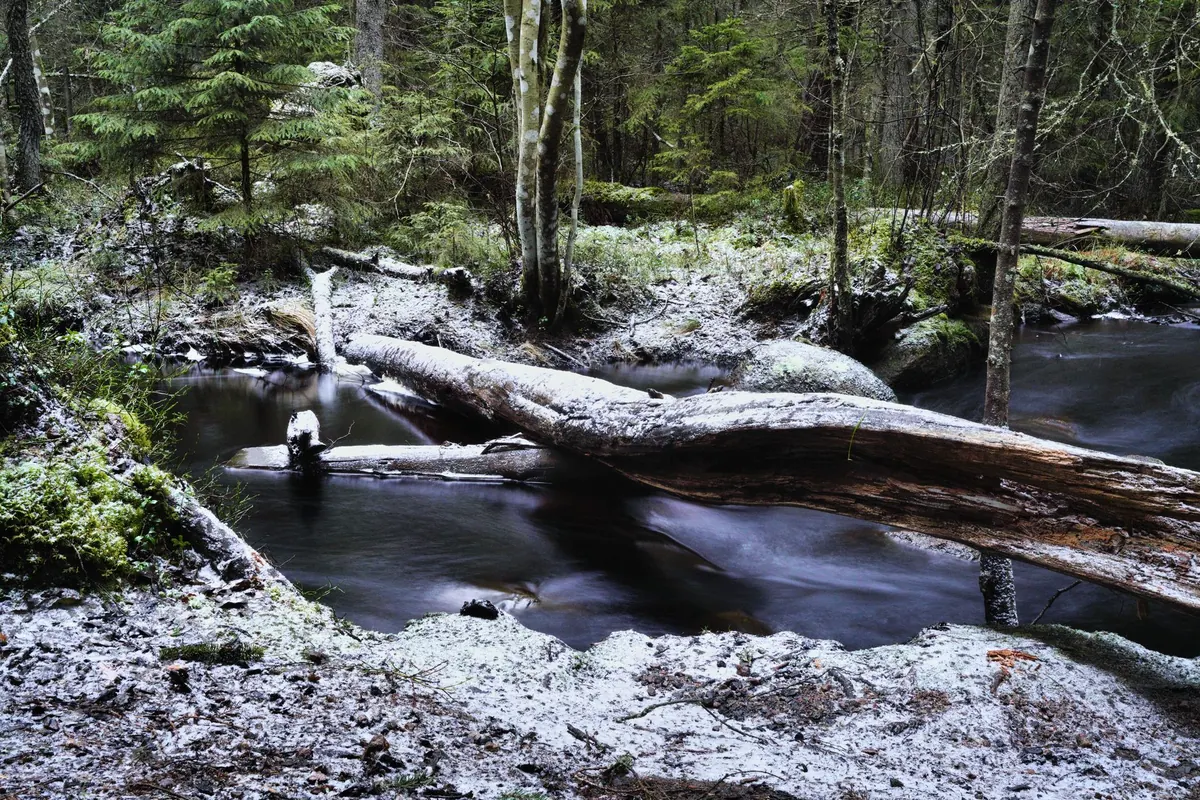
- Strainer: A fallen tree, root wad, fence, or brush pile with water moving through it. Anything the current passes through will also pull you into it and hold you there. The surface often looks glassy; underneath is a sieve.
- Sweeper: A tree or branch leaning into the river at or just above the water line, with water flowing underneath. Anything floating — a tube, a body — gets pushed below it and pinned against the branches.
- Foot entrapment: Your foot wedges between rocks, under a ledge, or into a crack while the current pushes your body downstream. The water doesn't simply hold you; it drives you down and keeps you down.
The common thread is pressure. Moving water pushes hard against whatever it touches, and a human body can't hold position against even a modest current. Every technique below is about keeping your airway clear, keeping your body on the surface, and buying yourself a route to an eddy or a bank.
The Defensive Position Comes First
Before you learn a single escape move, learn to float properly. This position is what keeps you from being trapped in the first place, and it's what gives you the few seconds of control you need at an obstacle.
- Roll onto your back, face up, with your head slightly upstream and your feet downstream, ahead of you, where you can see them.
- Keep your feet on the surface. Knees slightly bent, toes up. Feet are your shock absorbers and your early warning system.
- Stretch your arms out to the sides and scull gently with your hands. Use them to steer, not to grab at branches.
- Look downstream over your toes so you spot hazards while you still have room to react.
- Lean back and breathe. Panic burns the energy you'll want at the obstacle.
The rule that travels with the position: never stand up in moving water deeper than your knees. Standing is how feet get trapped, and it also breaks the one posture that keeps your head above the surface.
Use small angles to reach slack water
If you see an eddy ahead, point your body slightly across the current and let the water carry you toward it while you scull. Even a gentle ferry angle beats fighting straight upstream. Ten strokes in the right direction often mean the difference between drifting into a strainer and sliding into calm water behind a rock.
Strainers: Get On Top, Not Under
If you can't avoid a strainer, commit to arriving on top of it. That means staying on the surface, swimming hard, and getting your chest onto the trunk or the root wad as you make contact. Kick, pull with both hands, and crawl up. Once you're out of the water, stay out — straddle the trunk with your feet pointing downstream, then work sideways along it toward the bank.
If you do get pushed under or pinned against the face of it, don't fight the wall head-on. Tuck your chin, cover your head with your arms, and work sideways along the obstacle toward its edge, hand over hand if you can find a hold. Where a strainer thins out or ends, the current is usually weaker and you can slip free. This is a place to move deliberately, not to thrash.
Sweepers: Over the Top, or Under and Through
A sweeper is a low branch, not a solid wall, so your options depend on how much space is beneath it. If the trunk is low and sturdy, kick hard, get your chest over it, and pull yourself up. Lie flat along the branch with your feet downstream. Don't sit up on a sweeper; so much force concentrates under it that sitting up can push you back into the gap.
If the branch sits high and you're being carried underneath, treat it as a last resort and commit. Take a full breath, stay on your back, put your arms in front of your face, and let the current take you under feet-first. Don't grab branches overhead on the way through — you'll rotate into them and get pinned. The moment you surface past it, turn toward the nearest slack water.
Foot Entrapment: The One to Prevent
Foot entrapment is the most preventable of the three and the hardest to escape. Nearly every case starts with someone standing up or trying to stop themselves in fast water. If your foot does lodge, here's what to do.
- Don't fight to stand. Roll onto your back and lean into the current so it holds you on the surface. Struggling upright drives your head under.
- Work the foot free. Reach down with one hand and pull at the shoe while pushing off the rocks with the other to change the angle of your foot.
- Stop thrashing if it won't come. Keep your head up, wave one arm continuously, and conserve your air. Panic shortens the time you have.
- If you're with others, don't wade in. Call for local emergency help, throw a rope bag or flotation so it drifts down to the swimmer, and keep talking to them. A foot entrapment is a rope problem, not a swimming problem — contact rescues belong to people with swiftwater rescue training.
This is also why footwear matters. A snugly laced river shoe is far less likely to wedge into a crack than a bare foot or a loose sandal, and it can be slipped off in an emergency. Seek out a proper swiftwater safety course if you float often; a day of professional instruction is worth more than any written guide, and it's the kind of training that pays off in seconds.
Scout, Plan, and Carry the Right Gear
- Walk the reach from shore before you launch, and scout again from the eddy above any blind bend.
- Mark the eddies and exits in your head. Those are your escape routes.
- Check the flow before you go. Rising or high water makes all three hazards worse — skip the float and come back another day.
- Wear a properly fitted PFD, a helmet on rocky runs, and secure river shoes.
- Carry a throw bag and know how to throw it, plus a rough idea of where you are on the river.
- Never float alone, and tell someone your put-in and take-out.
Practice Before You Need It
Rehearse the defensive position in a calm eddy with a partner. Practice rolling onto your back, keeping your feet on the surface, ferrying toward slack water, and climbing back onto your tube. Then choose a stretch of easy water, scout it from shore, and float it with the position fresh in your mind. Skills you've used in calm water are the ones that show up when you're out of breath and moving fast.
And if the water is high, the strainers are
Photo: Damir K / Pexels